

"How much does a website cost in Toronto?" is the question we answer more than any other, and the honest answer depends on three things: what kind of site you are building, who builds it, and how the work is priced. Get any one of those wrong and two quotes for "the same website" can be $30,000 apart. This guide covers all three, with the ranges we and our peer agencies are actually quoting in 2026, and it replaces the four separate pricing articles we used to keep on this blog.
If you only want the number, jump to ranges by site type. If you want to understand why the number is what it is, and how to make it smaller without making the site worse, read the whole thing. It is long because the question deserves it.
The 2026 picture in four tiers
Across Toronto, website pricing sorts into four tiers. Every quote you receive belongs to one of them, and most confusion comes from comparing quotes across tiers as if they were the same product.
- DIY and template builds: $0–$3,000. Squarespace, Wix, a Shopify template, maybe a freelancer for a few hours of cleanup. You get a URL and basic content.
- Freelancer or small studio: $3,500–$9,500. Custom-ish design on WordPress or Webflow, five to eight pages, basic SEO. One person doing strategy, design, development, QA and project management.
- Mid-market agency: $11,000–$30,000. Custom design, branded interactions, a proper CMS, analytics, an SEO baseline, and a team behind it. This is where most Toronto professional-services firms, clinics, contractors and local B2B companies land.
- Senior agency or fully custom: $30,000–$145,000+. Full strategy, custom components, integrations, motion, accessibility, measurement.
When a Toronto business owner gets three quotes back and sees $5,500, $16,500 and $45,000 for the same brief, that spread is not random. The cheap quote is building a brochure. The middle one is building a marketing asset. The expensive one is building a platform. The right question is not "which is cheapest" but "which problem am I actually solving."
2026 ranges by site type
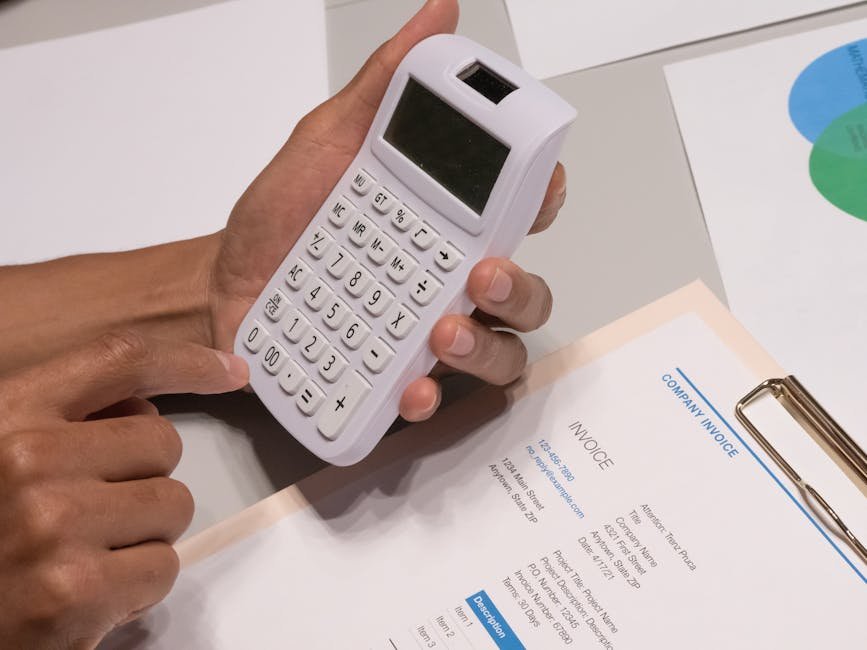
The single biggest variable in a website budget is not the agency. It is the type of site. These are the five categories that cover roughly 95% of what Toronto clients ask for, with agency ranges first and freelancer ranges where they apply.
Landing page
$4,500–$13,500 at an agency · $1,500–$4,000 with a freelancer. One hard-working page with a single goal: capture a lead, start a signup, or sell one product. Used by coaches and consultants launching an offer, companies running paid ads that need a dedicated destination, and start-ups testing an idea. An agency price includes custom design, a responsive build, form and CRM integration, analytics and basic SEO. It does not include copywriting, photography or complex animation; add $1,500–$3,500 for those.
Small business site, five to eight pages
$10,500–$21,500 at an agency · $3,500–$8,500 with a freelancer. The most common project in Toronto. Home, About, two to four service pages, Contact, Blog. A mid-range budget of $13,000–$16,000 in 2026 covers a discovery workshop and sitemap, custom design for every page type on desktop and mobile, a build on a modern stack (WordPress, Webflow, or a custom front end), an editable CMS, on-page SEO with schema and analytics, two revision rounds and a post-launch support window. What pushes you past $21,000: heavy motion, a component-system-level design, an accessibility audit, or a large volume of content.
Content or CMS-heavy site, ten to twenty-five page types
$22,000–$69,000. If the site will hold dozens or hundreds of structured items such as case studies, locations, team members, properties or articles, you are in CMS territory. Typical for SaaS marketing sites, larger professional firms, real estate and media brands. The jump from a small-business site is not the page count; it is the content model: defined content types, editorial roles and workflows, filters and search, performance work across generated pages, and editor training.
E-commerce
$15,000–$54,000 for most Toronto small-to-mid brands on Shopify. The floor is a clean Shopify build on a premium theme with brand customisation and product templates. From $25,000 you get a custom theme, Klaviyo flows, reviews, subscriptions and analytics dashboards. Shopify Plus builds with checkout extensions, B2B and multi-currency run $40,000–$80,000. Headless builds, custom product information systems and enterprise integrations run $80,000–$250,000 and beyond. The hardest part of an e-commerce project is rarely the build; it is the photography, copy, email flows and ad creative that get people to the store and through checkout. Budget for those first.
Custom web application
$80,000–$500,000+. Anything with accounts, dashboards, user-specific data, admin tools or a real database underneath is software, not a website, and it is priced like software. Timelines run three to eighteen months. If someone quotes you $15,000 for something in this category, they are building a website and calling it an app.
Rule of thumb
Every new structured page type (a product template, a case-study template, a location page) adds roughly $1,500–$4,200 to a 2026 agency quote. Count the unique templates in a proposal and multiply. It is the quickest way to sanity-check any number you are given.
What you are actually paying for
When you hire a Toronto agency or designer, you are paying for three things in roughly these proportions:
- Thinking, 30–40%. Strategy, sitemap, information architecture, UX, research, decisions.
- Craft, 40–50%. Visual design, typography, components, interaction, motion, and the build itself.
- Process, 15–25%. Reviews, feedback cycles, handoff, documentation, QA.
Clients who look only at the craft line ("the designs look the same, why does one cost three times more?") miss the other half of the work. The thinking and the process are what make the craft buildable, on-brand and aligned with the business. Skip them and you get mockups that look fine in Figma and fall apart at launch.
Where the money goes inside an agency quote
- Discovery, strategy, sitemap: 10–15%
- UX and wireframes: 10–15%
- Visual design: 20–25%
- Front-end development: 25–30%
- CMS and back-end integration: 10–15%
- QA, cross-browser, accessibility, launch: 8–10%
- Project management: 8–12%
The two line items that surprise most clients are strategy at the front and QA at the back. Both are the difference between a site that looks good and a site that works, and both are the first things cut from a cheap quote. Both are also where the cheap quote comes back to bite within six months.
Hourly vs flat-rate vs retainer
How the work is priced matters as much as who does it, because it decides who carries the scope risk.
Flat-rate (fixed scope)
You agree on a scope (pages, features, revisions) and a single number. The agency carries the risk. This is how most Toronto agencies price website builds. Predictable budget and clear deliverables; the trade-off is change orders for anything outside scope, and agencies pad estimates by 15–25% to cover the risk they are taking. Best for defined-scope builds, landing pages and redesigns.
Hourly
You pay for time worked against an agreed rate and carry the scope risk yourself. Flexible, no padding, pay for what you use; but the total is unpredictable and you have to manage the hours. Best for discovery, UX research, design systems, ongoing optimisation and advisory work.
Retainer
Fixed monthly hours at a set rate. Reserved capacity, deep familiarity with your brand, faster turnaround; but you commit monthly whether you use the hours or not. Best for post-launch iteration, content-driven teams and growth-stage companies.
In practice, most healthy Toronto engagements combine models: flat-rate for the build, then a retainer or hourly work for what comes after.
In-house vs agency vs freelancer
The real comparison is not the hourly rate. It is loaded cost, capability and reliability.
Toronto rates in 2026
- Junior or entry-level freelancer: $45–$75/hr
- Mid-level freelancer or small studio: $85–$145/hr
- Senior freelancer: $125–$175/hr
- Mid-market agency (effective billed rate): $140–$225/hr
- Senior agency or creative director: $200–$330/hr
Rate alone does not predict cost. A senior designer at $175 an hour who nails a homepage in 35 hours is cheaper than a junior at $60 an hour who needs 120. What you are paying for is speed-to-good.
In-house designer
A full-time mid-level web designer in Toronto costs roughly $75,000–$95,000 in salary, which loads to $95,000–$125,000 with benefits, equipment and overhead; senior designers load to $110,000–$150,000 and up. Deep context and always available, but a fixed cost regardless of workload, one person's skill set, and two to four months to recruit. If you need forty or more focused design hours every month, in-house usually wins on price.
Freelancer
A typical small-business engagement lands at $3,500–$8,500. Cheapest and most flexible, and the right call for well-defined small projects. The risks are bus-factor (vacations, other clients, disappearing acts), one person's skill set, and usually no formal process or QA. Roughly six in ten of the Toronto clients we speak to have been burned by a freelancer engagement at least once, almost never on quality, almost always on reliability.
Agency
A team covering strategy, design, development, project management and QA, with process and accountability baked in. The most expensive option, and the right one for revenue-critical sites, complex builds and brand-sensitive work. Our guide to choosing a web design agency in Toronto covers how to tell a real team from a salesperson with subcontractors.
Design-only pricing: what the design half costs
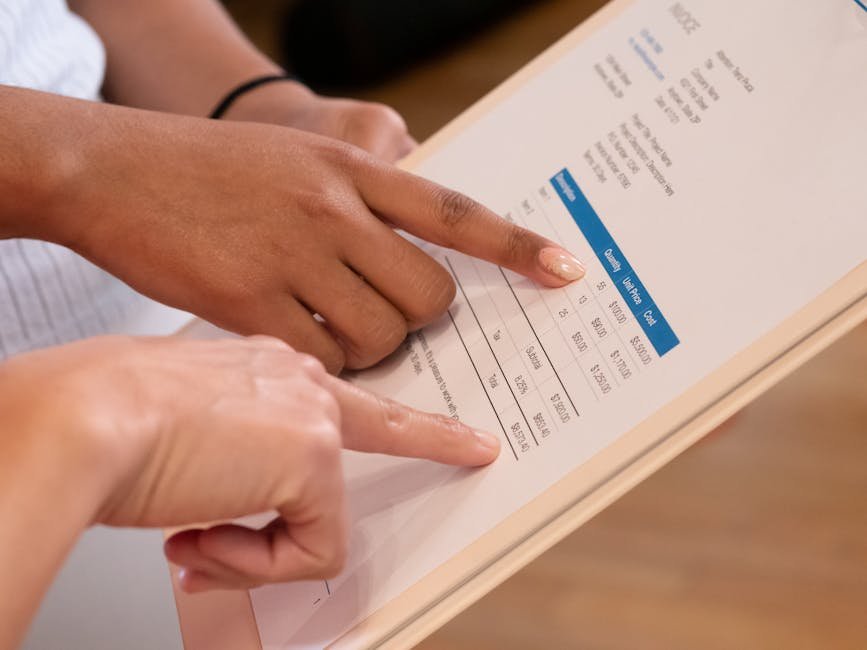
Most quotes bundle design and development into one number. On a typical Toronto project the split is roughly 40% design and 60% development. If you are hiring a designer separately, or want to know what the design portion of a bundled quote should look like, these are the 2026 design-only ranges (no development, copy or photography):
- Landing page: $1,800–$4,500. One page, desktop and mobile.
- Small business site: $4,500–$10,000. Home, About, two to four service templates, Contact, Blog template.
- Marketing site with components: $10,000–$22,000. Multiple page types, component library, motion direction.
- E-commerce theme design: $8,000–$25,000. Theme, product and collection templates; more if checkout and account flows are designed.
- Full design system: $25,000–$65,000+. Foundations, component library, templates, motion guidelines and documentation. Only worth it if you will keep building: multiple properties, ten or more new pages a year, or an internal team shipping weekly.
A proper design engagement runs through five phases, each with its own deliverable: discovery and strategy (10–15% of the design budget), sitemap and user flows (5–10%), wireframes (15–20%), visual design (40–50%) and handoff documentation (8–12%). The phase most often skipped is discovery, and it is the one whose absence most often blows the project up later. For a typical $8,000 design engagement that is 70–90 hours of work; a freelancer can sometimes do it in 40–55 hours by skipping the team review and documentation. You pay less, and you skip the checks.
Revisions are where design budgets die. Most engagements include two rounds per stage; beyond that you pay $100–$250 an hour. "Unlimited revisions" in a proposal almost always means the job is underpriced and round seven will never happen.
Why Toronto website prices rose, and what AI actually changed
Compared with 2024, Toronto website pricing has drifted up roughly 18–24% depending on tier. Four things drove it.
- Senior talent got more expensive. Senior designers at reputable studios moved from roughly $140–$165 an hour in 2024 to $160–$215 in 2026, and senior developers followed the same curve.
- SaaS and hosting costs rose. Webflow, Shopify Plus, analytics, CDN, email and CMS subscriptions all increased 5–20%, and agencies pass some of that through.
- Scope crept toward better craft. Accessibility (AODA and WCAG 2.2 AA), Core Web Vitals, structured data and AI-overview optimisation stopped being optional on mid-market sites. Each adds hours.
- AI changed the bottom of the market, not the top. For template and DIY sites, AI builders genuinely made things cheaper. For anything custom, AI compressed junior work (first-draft copy, boilerplate components, routine development, roughly 10–20% of mid-level hours) and shifted the budget toward strategy, senior design, integrations and QA. An AI-assisted agency ships perhaps 20–30% faster than in 2023, but the saved time went back into the parts that make a site perform, not off the invoice.
Net effect: the gap between the cheapest quote and the most expensive quote in your inbox got wider, not narrower.
Hidden costs and ongoing costs
The sticker price is not the cost. These are the line items Toronto clients most often forget to budget:
- Copywriting: $1,800–$7,500 if you hire a real writer. Most agencies quote "client provides copy" by default; most clients cannot.
- Photography and video: $1,800–$9,500+. Stock photos look like stock photos.
- Branding refresh: $6,000–$29,000 if your identity is more than five years old. Often needed before a redesign works.
- SEO setup and migration: $1,800–$5,800 so a redesign does not destroy the rankings you already have. Our redesign migration checklist explains what that has to include.
- Accessibility audit and remediation: $1,600–$5,400 for AODA and WCAG 2.2 AA.
- Analytics and measurement: $1,600–$4,800 for GA4, server-side events, consent mode and dashboards done properly.
- AI-overview optimisation: $1,200–$3,800 for FAQ schema, answer-first content and clean citations.
Then the annual costs after launch: hosting and SaaS at $400–$3,000 a year depending on the stack; domain, SSL and email at $150–$500; a maintenance or care plan at $150–$2,500 a month if you want an agency on call; content updates at $500–$3,000 a month if you are regularly adding pages; and $1,500–$8,000 a month for a real SEO or content programme. A $16,500 site quoted in 2026 usually costs the client $22,500–$28,000 in its first year once copy, photography and hosting are included. A site with zero ongoing investment starts visibly ageing within twelve months.
Scoping a website for 2026?
Let's build you a real quote, not a guess.
We will walk you through your sitemap, complexity, integrations and a realistic budget based on hundreds of Toronto projects. A free 30-minute scoping call; you leave with a range even if you do not hire us.
Get a scoped quoteHow long a website actually takes
- Landing page: one to two weeks of design, one to two weeks of build.
- Small business site: three to six weeks of design, four to eight weeks of build.
- Marketing site with components: six to ten weeks of design, eight to fourteen of build.
- Mid-market Shopify store: five to nine weeks of design, eight to fourteen of build.
- Design system: six to twelve weeks of design, ongoing build.
The variance is almost always on the client side. Projects that ship on time have a single decision-maker, finished content and fast feedback. Projects that drift have committees, missing content and slow reviews, and every week of drift adds hours of re-familiarisation and scope creep. Assign one empowered decision-maker. Projects with one ship 30–50% faster and cost 10–20% less.
The levers that move the number
If you want to bring a quote down without making the site worse, these are the levers that work, roughly in order of impact:
- Page types. Fewer unique templates, less work. Five templates done well beat fifteen done badly.
- Content readiness. Provide final copy and photography. Do not make the designer guess.
- Brand maturity. A defined identity cuts design time by 20–30%.
- Design fidelity. Polished but simple costs less than motion-rich and expressive. Defer motion to phase two.
- Revision discipline. Be specific in the brief; every "actually, can we try…" is billable time.
- Decision speed. One decision-maker, fast reviews, clear feedback.
- Scope discipline. Resist "while we're at it" until after launch.
Where trimming costs you more later: skipping discovery and the sitemap, cutting QA and accessibility, skipping analytics setup, and launching with no content or SEO plan.
Is a $20,000 website worth it for a small business?
Connect the site to revenue. A $20,000 site that adds $5,000 a month in qualified leads pays for itself in four months. A $20,000 site on a business with no traffic strategy is a $20,000 brochure. The rule of thumb from our own client portfolio:
- Under $150,000 in annual revenue: stay lean, $7,000–$12,500, ship and iterate.
- $150,000–$1M: $13,000–$23,000 is where the site pays back.
- $1M–$5M: $26,000–$64,000 for custom work, real SEO and a conversion focus.
- $5M and up: $64,000 and beyond is where the return is obvious.
Right-sizing matters more than the number. A $52,000 custom CMS on a business doing $200,000 a year is a mistake. A $7,000 template on a brand doing $3M a year is a bigger one.
How to read a Toronto quote, and the red flags
A clear proposal breaks the work down by phase: discovery, sitemap, wireframes, design, development, QA and launch, revisions, handoff. If you get a single line that says "Website: $14,000", ask for the breakdown. Not to argue it, but because the breakdown shows what the agency values and how it thinks. Then watch for these:
- "Unlimited revisions." The job is underpriced and the later rounds will not happen.
- No discovery phase. Skipping strategy is a shortcut to rework.
- Eighty percent of the cost in "visual design" and almost nothing in discovery or sitemap. You will feel it within six months.
- Hourly with no cap. You are carrying all of the scope risk.
- No handoff documentation, no post-launch terms, no ownership clause. Ask who owns the code, the domain and the hosting account. The only acceptable answer is you.
- A quote far below the bottom of a range above. The gap is almost always strategy, QA or accessibility. Ask which one was cut.
How to pick your budget
- Start with the business case. What does the site need to do: leads, sales, credibility, recruiting? What is that worth per year?
- Pick the site type from the ranges above.
- Pick a tier inside that type. Floor, mid or senior, matched to the business stakes.
- Choose the pricing model. Defined scope and a one-off site: flat-rate. Evolving scope and many iterations: hourly or retainer. Forty-plus design hours a month, ongoing: hire in-house.
- Add 20% contingency. Real projects discover scope during discovery.
- Budget twelve months of ongoing costs. Hosting, care, content, SEO.
Do that once and you will have a defensible number, and you will recognise the right quote when it arrives. If you would like to run the exercise with us, book a scoping call, or see how our web design engagements are structured. Every range on this page is current as of September 2026; add 5–8% if you are scoping into 2027.


