
Meta Ads work for home service businesses when three things are true: the ad shows real work and real people, the lead form filters out the people you cannot serve, and someone calls each lead back within minutes. Renovation, HVAC, plumbing, roofing, landscaping, cleaning and inspection companies can all buy jobs profitably on Facebook and Instagram in 2026. Most of the ones who say it "doesn't work" ran generic creative into an unfiltered form and called the leads back the next day.
This is the playbook we use for contractors and home service companies in Toronto and across Ontario. It covers where Meta fits next to Google, lead forms versus landing pages, how to protect lead quality, the creative that consistently works for trades, Ontario seasonality, the ad policy question every contractor asks, and the follow-up system that turns a lead into a booked job.
Where Meta fits for a home service business
Meta is not where a homeowner goes when a pipe bursts. That search happens on Google, and for urgent repair work Google Search and Local Services Ads should get the first dollar. We cover that split in detail in Google Ads vs Meta Ads.
Meta earns its place in three other situations:
- Planned projects. Kitchens, basements, decks, landscaping, roof replacements, new HVAC systems and window coverings are thought about for weeks or months before anyone searches. Meta reaches homeowners during that thinking stage.
- Seasonal and maintenance offers. Furnace tune-ups, AC check-ups, spring clean-ups, gutter cleaning and recurring cleaning plans are easy to say yes to when they appear at the right moment, even though nobody was searching for them that day.
- Brand recall. A homeowner who has seen your crew in their feed three times is more likely to click your name when they finally search. Meta makes your Google spend work harder.
The rule we give clients: Google for "I need this now", Meta for "I've been meaning to do this".
Lead forms vs landing pages
Meta gives you two ways to collect a lead. Instant Forms (Lead Ads) open inside Facebook or Instagram, pre-filled with the person's name, email and phone. Landing pages send the person to your website to fill in a form or call.
| Factor | Instant Forms | Landing page |
|---|---|---|
| Cost per lead | Lower, often much lower | Higher |
| Lead quality | Mixed without qualifying questions; some people submit without realising | Higher; the person chose to leave the app and fill in your form |
| Volume | High | Lower |
| Tracking | Native to Meta; needs a CRM connection to be useful | Needs the pixel plus the Conversions API, set up properly |
| Best for | Simple, lower-ticket offers: tune-ups, cleaning, inspections, estimates with a clear filter | High-ticket projects where the buyer needs proof: renovations, roofing, landscaping design |
Our default for most trades is an Instant Form with friction built in, tested against a landing page once the account has data. Two settings matter. First, use Meta's higher-intent form type, which adds a review step so the person confirms their details before submitting. Second, add qualifying questions. The cheapest lead is the one you never have to call.
For renovation and other five-figure projects, a strong landing page usually wins on cost per booked job even when it loses on cost per lead. It should show finished projects, reviews, the service area and a short form, and it should load fast on a phone. Our guide to landing page conversion rate optimisation covers what to put on it.
Protecting lead quality
Lead quality is the complaint we hear most from contractors who have tried Meta. It is fixable, and the fix is mostly in the form and the feedback loop, not the targeting.
- Ask for the postal code or city. Filters out people outside your service area before your team spends time on them.
- Ask what the job is. Multiple choice: repair, replacement, new install, not sure. Use the answer to route the lead and to price the follow-up.
- Ask when they want it done. "Within two weeks", "within three months", "just researching". Researchers are not bad leads; they belong in a nurture sequence, not on the urgent call list.
- Ask whether they own the home where ownership matters to the job, such as roofing, renovations and HVAC replacements.
- Send results back to Meta. Connect your CRM so lead stages flow back through the Conversions API. Meta can then optimise for leads that became booked jobs rather than for anyone who taps submit. This is the single biggest quality lever available on the platform.
Expect cost per lead to rise when you add friction. Cost per booked job is the number that matters, and in the accounts we manage it usually falls.
Creative that works for contractors
On Meta, the creative does most of the targeting. Broad audiences are now the norm, and the algorithm finds homeowners by learning who stops on which ad. That makes your ads the most important lever you control. Four formats consistently earn their budget for home service businesses:
Before and after
The oldest format in the trade still works because it answers the homeowner's real question: what will my place look like? Use your own projects, shot from the same angle, ideally as a short vertical video that moves from before to after. A carousel of three or four projects works well in the feed.
Customer video and UGC
A homeowner saying "they showed up on time and cleaned up after" on a phone camera often beats a polished ad, because it looks like a recommendation from a neighbour. Ask happy customers at handover. Keep it under 30 seconds, with captions, because most people watch without sound.
Owner on camera
Homeowners are letting someone into their house. Seeing the owner or lead tech explain how they work, what a job costs to diagnose, or what to watch for before winter builds trust no stock photo can. It does not need a studio; it needs a clear first line and good audio.
Crew at work and process
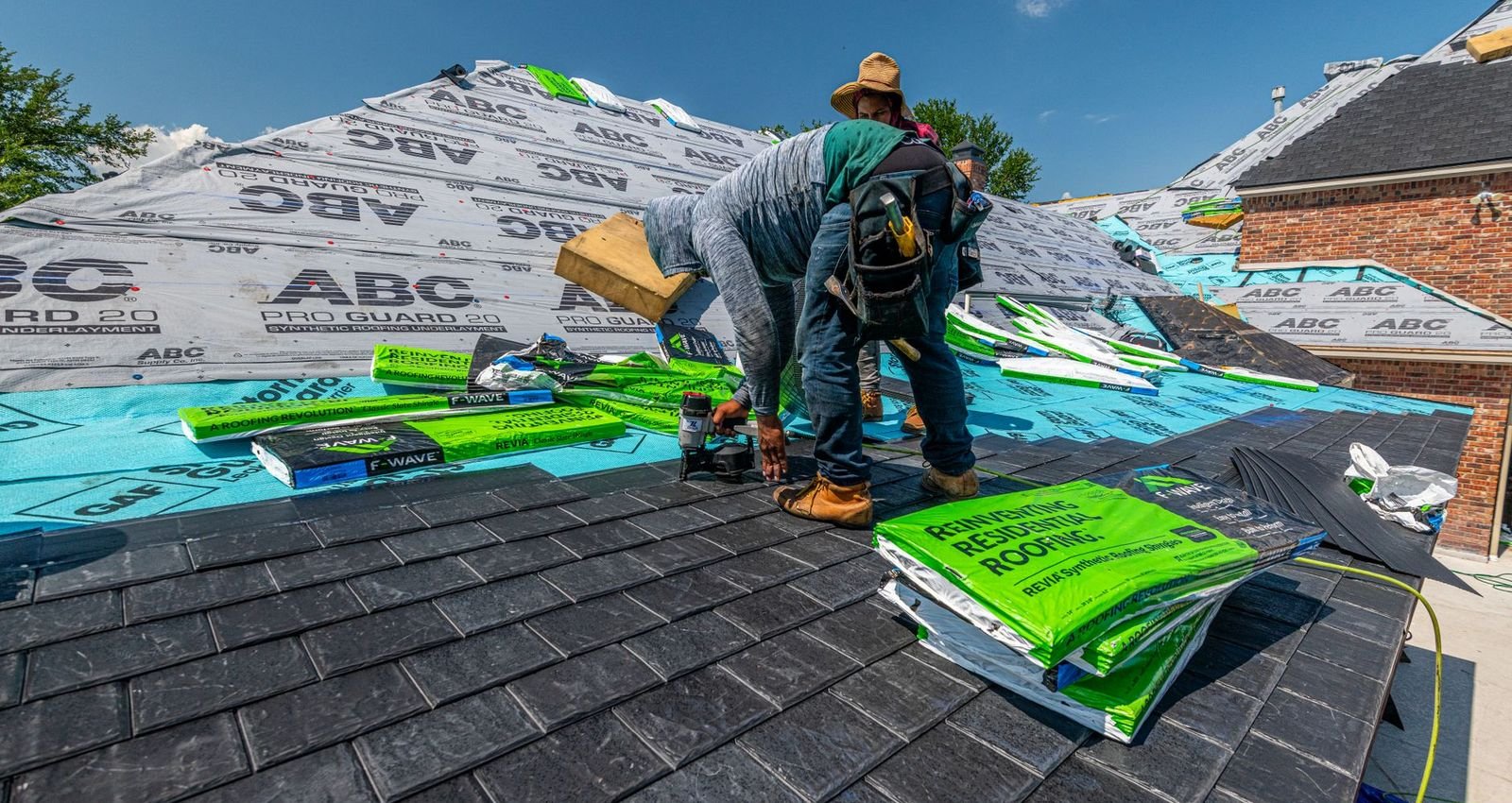
Short clips of the crew laying sod, pulling a furnace or flashing a roof show competence. Pair them with a specific offer and a deadline rather than "call for a free quote".
Refresh creative every few weeks. The same homeowners see your ads repeatedly in a defined service area, so fatigue arrives faster than it does for national brands. We aim to ship new variants every week for active accounts, and our content creation team shoots on site so the footage is your crews and your projects, not stock.
Running Meta Ads for a trades business?
We will show you where your leads are leaking before you spend more.
Creative Scope runs Meta Ads for home service businesses across Ontario, from lead forms and creative production to CRM tracking. A free account review looks at your forms, creative and follow-up, and tells you what to fix first.
See our Meta Ads managementSeasonality in Ontario
Ontario's climate drives home service demand harder than most markets, and your Meta budget should follow it. Plan creative a month before each window, because the learning phase takes one to two weeks.
| Trade | Peak demand | When to start Meta campaigns |
|---|---|---|
| HVAC | Furnaces October to January; air conditioning May to August | Late August for furnace tune-ups; April for AC |
| Roofing | April to November, spikes after storms | March for replacement planning; fall for pre-winter repairs |
| Landscaping | April to October; snow contracts sold in the fall | February for design-build; August for snow removal |
| Renovation | Planning January to March; basements in fall and winter | January for spring and summer builds |
| Plumbing | Frozen pipes in deep winter; sump pumps at spring thaw | Mostly Google; Meta for maintenance offers before each season |
| Cleaning | Spring cleaning; move-outs at month end | March; always-on for recurring plans |
| Inspections | Follows the real estate market, strongest in spring and early fall | February and August |
In the off-season, do not switch Meta off entirely. Keep a small budget on retargeting and brand content so the next season does not start from a cold audience. Costs also rise in November and December as retailers bid up the same inventory, which is one more reason to front-load home service campaigns into September and October. Our guide to Meta Ads costs in Toronto covers what that does to CPMs.
Special Ad Categories: does this apply to you?
Meta requires advertisers to declare a Special Ad Category when an ad is about housing, employment, financial products and services, or social issues, elections and politics. Declared ads lose targeting options, including age and gender targeting and narrow location targeting, and some audience-building tools are restricted.
For most home service businesses, the relevant question is housing. Meta's housing category is aimed at housing opportunities and closely related services, such as real estate listings, rentals, mortgages and home insurance. A typical ad for furnace repair, a roof replacement, landscaping or cleaning is an ad for a service, not a housing opportunity, and normally runs as a regular campaign.
Two situations deserve a closer look:
- Financing offers. An ad built around monthly payments or financing for a renovation or HVAC system can fall under financial products and services.
- Ads tied to buying or selling a home. Inspection, staging or pre-listing services aimed at buyers and sellers sit closer to the real estate line than a repair ad does.
Meta updates these definitions and how they apply by country, so read the current policy in Ads Manager before launch and declare the category if you are unsure. An ad Meta classifies as a special category but you did not declare is likely to be rejected.
Speed to lead and the CRM
A Meta lead is someone who tapped a button between other things on their phone. Within an hour they have usually forgotten, or filled in a competitor's form too. Speed to lead is the time between the form submission and your first real contact, and for home services it should be measured in minutes.
- Get leads out of Meta instantly. Never download leads from Ads Manager by hand. Connect Instant Forms to your CRM or field service software so every lead arrives in seconds.
- Alert a person. A text or app notification to whoever books jobs, with the lead's answers attached.
- Reply automatically, then call. An instant text confirming you received the request, followed by a call within five minutes during business hours.
- Nurture the rest. Leads who are "just researching" go into an email and text sequence with project photos, reviews and a seasonal offer.
- Record the outcome. Booked, quoted, won, lost, and why. Those stages feed back to Meta and tell you which ads produce jobs.
In the accounts we manage, leads called within minutes book at a visibly higher rate than leads called the next morning, and that difference often decides whether a campaign is profitable. If your team cannot respond that fast, automation can cover the gap; our marketing automation and AI team builds these follow-up flows.
What this looks like in practice
Mike Holmes Inspections offers home inspections across Canada and was expanding into new franchise markets. We built a Meta Ads strategy with separate messaging and visuals for homeowners booking inspections and for prospects interested in a franchise, monitored performance daily, tested multiple ad formats, and streamlined the lead capture process to reduce friction. Over ten months the paid program delivered more than 2,100 conversions and 2.28 million Meta impressions, with cost per lead held on target, alongside SEO and email work. The full story is in the Mike Holmes Inspections case study.
The lesson carries to any trade: separate audiences get separate creative, lead capture should be as short as quality allows, and the numbers are reviewed weekly, not quarterly.


