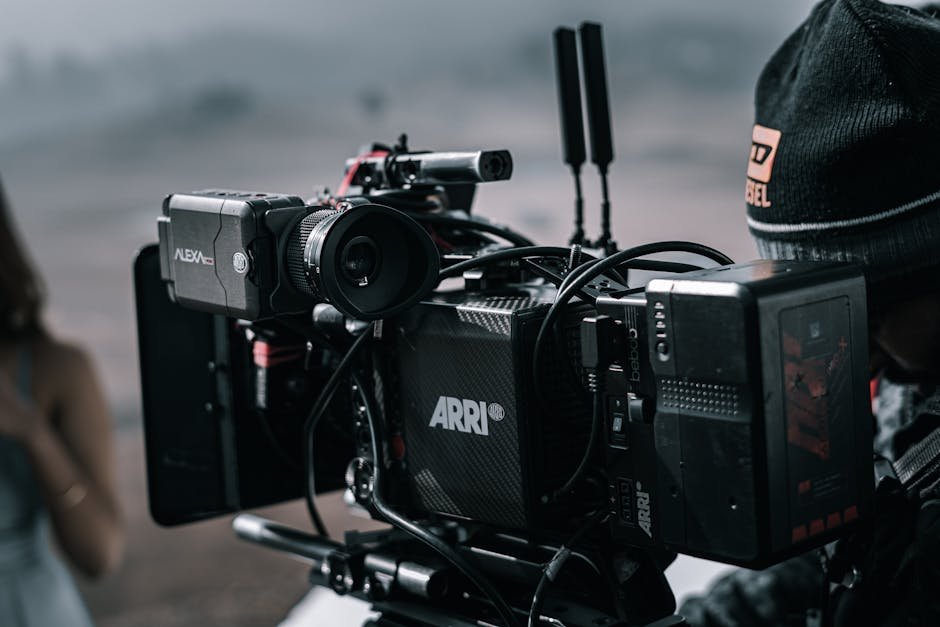
Every platform's feed is now a video feed. Instagram re-ranked toward Reels years ago, Facebook followed, LinkedIn is deep into a video push, YouTube is both long-form home base and a short-form contender via Shorts, and TikTok remains the attention benchmark. If you're running a modern marketing program without a serious video function, you're running with one hand tied behind your back.
This is the playbook we use when we build video into client marketing stacks at Creative Scope — across short-form organic, paid-ad creative, and long-form YouTube. It covers what to shoot, how to edit per platform, how to hook attention inside 3 seconds, and how to measure video properly so you can tell what's actually working.
Why video dominates the 2026 feed
The platform economics have converged. Every major algorithm now weights completion rate and watch time heavily in ranking — and video produces much stronger watch-time signal than static content. Paid ad platforms see the same — Meta, TikTok, and YouTube all subsidise video inventory with lower CPMs because video keeps users in-app longer.
The result: in 2026, video is the cheapest distribution you can buy on paid, the most algorithmically rewarded you can produce organically, and the most durable content asset you can create for search (via YouTube, which ranks inside Google SERPs for most commercial queries now).
Short-form vs long-form — picking where to invest
Both formats work. They serve different jobs.
- Short-form (TikTok, Reels, YouTube Shorts, 15–60s): top-of-funnel reach, cheap to produce, fast iteration, double-duty as paid-ad creative. Ideal as a first investment.
- Mid-form (1–5 minutes, Instagram, Facebook, LinkedIn): education, case studies, customer testimonials. Lower reach but higher intent signal.
- Long-form (YouTube, 8–20 minutes): search discoverability, evergreen depth, highest-trust format. Slower to build but compounds for years.
Most brands should start short-form, learn what resonates in 4–8 weeks, then layer in long-form using the winning themes. Going straight to long-form from zero tends to produce expensive content nobody watches.
Platform-native production (not cross-posting)

The single highest-ROI production decision you'll make: edit per platform, don't cross-post.
Platform-native means:
- TikTok: hard hook first 1s, text-on-screen throughout, fast cuts (every 2–4s), sound-first design, native sound or trending audio, 9:16.
- Instagram Reels: hook first 2s, polish matters more, text-on-screen optional but recommended, 9:16, 15–45s sweet spot.
- YouTube Shorts: hook first 1.5s, more narrative permitted than TikTok, 9:16, 30–60s.
- YouTube (long): 15-second hook, 3-act structure, chapter markers, 16:9, aim for 8+ minute watch time.
- LinkedIn: square or 9:16, professional tone, captions always, 30–90s for best engagement.
- Meta feed video ads: 4:5 or 1:1 for feed, 9:16 for Stories/Reels placements, sound-optional, always captioned.
Shoot one day, edit three times. Most of our shoots produce a 9:16 short-form cut, a 16:9 YouTube cut, and a square paid-ad cut from the same raw footage. That's the economics that make video sustainable.
The 3-second hook rule
Every video lives and dies on the first 3 seconds. The platforms are measuring: does this viewer keep watching or swipe away? If they swipe in the first 3 seconds, distribution collapses.
Hooks that consistently work:
- Direct statement of stakes: "I lost $40k before I figured this out."
- Pattern interrupt: unexpected visual, unusual pose, surprising prop.
- Counter-intuitive claim: "The worst advice in marketing is to post more."
- Listicle promise: "3 things nobody tells you about Meta ads."
- Visual tension: something happening on camera that viewers need to see resolved.
- Direct-to-camera address: eye contact, confident posture, immediate statement.
If you can't describe your hook in one sentence, you don't have a hook. Write the hook sentence first, build the rest of the video around it second.
Captions, sound-on, and sound-off design

Different platforms have different sound cultures, and your video needs to design around the sound behaviour of its distribution:
- Sound-off dominant: Meta feed (70%+ sound-off), LinkedIn feed (80%+ sound-off).
- Sound-on dominant: TikTok (85%+ sound-on), YouTube Shorts (65%+ sound-on), YouTube long-form (95%+ sound-on).
- Mixed: Instagram Reels, Stories, and TikTok-style Reels.
The rule: captions on everything. Burn captions in at the edit stage rather than relying on platform auto-captions, which render inconsistently and often ignore brand styling. Use contrast-safe background behind captions (dark box or stroke), keep caption text under 2 lines, and time captions to the speaker for sound-off viewers who read more than watch.
Vertical formats and the death of 16:9
Except for YouTube long-form and certain connected-TV and pre-roll inventory, 16:9 horizontal is no longer the dominant format on social or paid social. 9:16 vertical wins for TikTok, Reels, Shorts, Stories, and Meta vertical placements. 4:5 or 1:1 wins for Meta and LinkedIn feeds.
Practical implication: frame every shoot for vertical crop first. Put the subject center-top third of frame so it survives multiple aspect-ratio crops. Shoot at a resolution (ideally 4K) that lets you re-crop without quality loss.
Sequential storytelling for YouTube
YouTube rewards sequential narrative structure. Viewers watching 5+ minutes are deep in the arc and the algorithm reinforces that behaviour with strong recommendations.
A long-form structure that works:
- 0:00–0:15 hook. Tell them what they'll get, preview the payoff, hint at the stakes.
- 0:15–1:00 context. Who are you, why should they trust this take, what's the specific angle.
- 1:00–end body. Main content, structured with on-screen chapter markers, 60–90 second sub-sections.
- Pattern breaks every 2–3 minutes — camera angle change, b-roll sequence, location change — to reset attention.
- Payoff and CTA. Close the loop opened in the hook, then a clear next step.
Production workflow that scales
Amateur brands treat each video as a one-off project. Mature video programs treat production as a system.
- Monthly shoot days. Batch 2–4 shoot days per month, each producing 15–30 short-form cuts plus 1–2 long-form pieces.
- A content calendar 4 weeks in advance. Know what you're shooting before the camera comes out.
- Modular scripting. Short-form scripts written as 3-beat structures that any on-camera talent can deliver.
- Editing templates. Pre-built Premiere or CapCut templates so 80% of the edit is drop-in, not from scratch.
- Asset library. Broll, b-cam footage, brand graphics organised and tagged for reuse.
The brands that produce video sustainably spend less per video than the ones doing it as special projects — they just spend more time on the system.
Pro tip
Your best-performing paid ad creative in 2026 will almost certainly be a re-edit of an organic short-form video that already did well. Tag every shoot as paid-eligible at capture, negotiate usage rights on any talent, and you'll produce paid ad creative at a fraction of the cost of purpose-built shoots.
Measuring video properly
Different objectives, different metrics. The set we report on:
- Hook rate (0–3s retention). The gatekeeper metric. If this is low, nothing else matters.
- Hold rate (50% and 75% retention). Tells you whether the middle of the video earns its length.
- Completion rate. Key for short-form.
- Average watch time. Key for long-form, especially YouTube.
- Click-through rate when CTAs exist.
- Cost-per-outcome for paid video.
- Save and share rate for organic short-form (better signal than likes).
- Assisted conversions via GA4 — video rarely gets last-click credit but often drives the first touch.
Set targets by format, not globally. A 90% hook rate is good for short-form and impossible for long-form; a 40% completion rate is great for YouTube but terrible for TikTok. Benchmark against yourself over time, not against a universal number.
Want a video program that ships consistently?
We run in-house video production for Toronto brands.
Strategy, shoot days, editing, and platform-native delivery — integrated with paid media, social, and YouTube campaigns under one roof. Free content audit to start.
See our content production servicesVideo is no longer optional, but it's also no longer as expensive as it used to be — if you run production as a system rather than a series of one-off shoots. Build the system once, layer platform-native edits on top, and video becomes the highest-leverage content asset in your mix.
For more on how we tie video into paid and social, see our YouTube ads services, explore our social media services, or keep reading the blog.


