
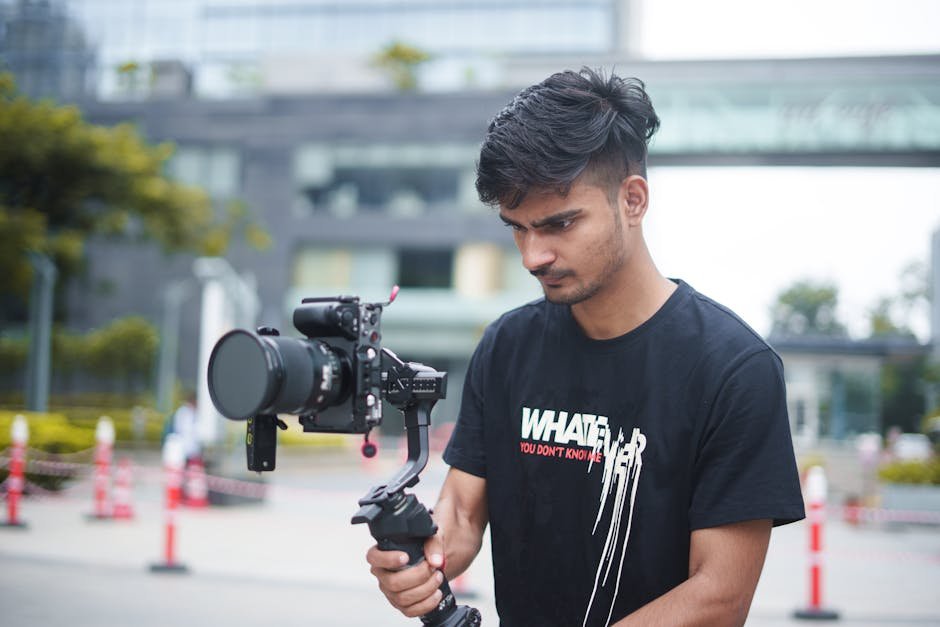
If you've opened a Meta ad account in the last year and wondered why your beautifully shot, colour-graded, studio-lit creative is getting crushed by a creator's 720p phone video filmed in a kitchen — welcome to 2026. User-generated content, or UGC, has quietly become the dominant creative format on Facebook and Instagram ads, and it isn't close.
We've rebuilt dozens of Meta ad accounts for Toronto brands around UGC as the primary creative input and keep seeing the same pattern: authentic, first-person video out-converts polished brand creative by 2–4x on cold prospecting audiences. This post breaks down why that's happening, how to source UGC without getting ripped off, how to brief creators so they deliver something usable, and how to deploy UGC inside a sane campaign structure.
Why UGC outperforms polished creative
It comes down to three forces — and all three are getting stronger, not weaker.
1. Native feed behaviour. Reels, Stories, and even the feed are now dominated by first-person, phone-shot content. When a polished ad appears in that environment, it looks and feels like an ad. When a UGC video appears, it blends with the content people actually came to watch. The algorithm measures that as higher hold rate, which means cheaper delivery.
2. Trust collapse on brand claims. Consumers have been marketed to so aggressively for so long that claims from a brand are discounted by default. A creator or customer saying "this actually worked for me" is processed differently — it's social proof dressed as content.
3. Meta's delivery algorithm rewards watch time. UGC tends to have stronger hooks (a face, a direct-to-camera opener, a visible product reveal within 1.5 seconds) and more watch-through at the 3, 10, and 15 second checkpoints. Those signals feed back into cheaper CPMs and broader reach.
UGC vs polished: how to split the budget

UGC isn't a replacement for brand creative — it's a complement. The mix we run for most DTC and service clients:
- 70% UGC — the workhorse for cold prospecting, testing, and scaling.
- 20% polished brand creative — for brand-awareness objectives, hero launches, and trust-reinforcement in remarketing.
- 10% founder / owner content — founder-led, face-to-camera content, which in 2026 is punching above its weight for higher-consideration purchases.
The common failure mode is treating UGC as the entire strategy. You still need polished assets for your website, your email program, and the brand identity that makes the UGC land. Creative without a strong brand behind it fatigues faster.
Where to source UGC creators in 2026
The ecosystem has consolidated. Here's what actually works, in order of speed-to-usable-creative:
- Meta's Creator Marketplace — vetted creators, integrated briefing, direct-to-ad-account workflow. Fast but expensive.
- Insense, Billo, TRIBE — dedicated UGC marketplaces. Good for volume, quality varies widely, expect to review portfolios carefully.
- TikTok Creator Marketplace — creators who film for TikTok tend to deliver better hooks and pacing, and the content repurposes cleanly to Reels.
- Direct outreach to micro-influencers — DM creators with 5k–50k followers in your niche offering paid UGC work. Higher quality ceiling, more relationship work.
- Your own customers — usually the highest-performing source (more on this next).
Pricing benchmark: $150–250 per basic UGC video, $250–400 for scripted/demo work, $400–800 for experienced creators with paid-ad usage rights included. Expect to pay 30–50% more for exclusive usage rights.
Your customers are your best creators

Almost every account we run ends up with the same top-performing creative: a real customer, unscripted, talking about the problem the product solved. No studio, no script, no lighting setup.
The system that makes this reliable:
- Post-purchase email at day 14–21 asking happy customers to film a 30–60 second video review for a $100–150 credit.
- A simple brief attached: "Who are you, what was the problem, how did [product] help, one thing that surprised you."
- A signed rights release (one-pager, covered in the next section).
- A payment-on-delivery flow via Stripe or PayPal so customers get paid within 48 hours of submission.
Conversion rate on these requests is typically 5–15% of happy customers. For a brand doing 500 orders/month with even a 10% review rate, that's 50 new UGC assets per month — more than enough to keep the ad account fed.
How to write a UGC brief that actually works
The fastest way to waste money on UGC is to give a creator vague direction. A good brief is one page and includes:
- The hook — the first 3 seconds, written out as a script line or "say something like this".
- The core message — what single claim or benefit the viewer needs to remember.
- The must-show — product on camera, use case demonstrated, any legal disclosures.
- The tone — casual, energetic, quiet-confident, whatever fits the brand.
- Technical specs — 9:16 vertical, 30–60 seconds, clean audio, captions-not-required (we'll add them), no branded backdrops.
- Reference examples — 2–3 competitor or similar-brand ads that nail the format. This single addition doubles brief-to-usable-asset conversion in our experience.
A creator cannot deliver your brand voice by instinct. The more specific your brief, the more usable their output. Over-briefing is rarely the problem; under-briefing almost always is.
Usage rights and the legal essentials
The single biggest mistake brands make with UGC is treating rights as an afterthought. If a creator pulls their content (it happens), or Meta flags your ad over a rights question, you can lose a top-performing creative overnight.
Every UGC agreement should cover:
- Scope of use: paid ads, organic social, website, email, retail point-of-sale. List each explicitly.
- Duration: 6 months, 12 months, perpetual. Longer = higher fee.
- Geography: Canada only, North America, global. Global usage typically adds 25–50%.
- Exclusivity: is the creator allowed to work with competitors during the rights period?
- Whitelisting (also called spark ads / partnership ads): does the creator allow their own handle to run the ad? Whitelisted ads typically outperform non-whitelisted by 20–30% on CTR.
- Compensation and payment terms — flat fee, milestone, or performance-based.
Use a proper agreement — not a DM thread. Standard UGC rights templates are available from any media lawyer for under $500, and it's a one-time investment you'll reuse hundreds of times.
Pro tip
Always get rights "for perpetuity on owned channels" (your site, email, organic social) and a shorter window (6–12 months) on paid media. This is the sweet spot — you can keep assets on your site forever, but you're not overpaying for paid-ad rights you may not use.
Deploying UGC in your campaign structure
UGC alone doesn't move the needle — how you deploy it does. The structure we run:
- One Advantage+ Shopping campaign as the scale engine, fed 20+ UGC creatives in ongoing rotation.
- A creative-testing campaign with daily budget of 5–10% of account spend, rotating 4–6 new UGC concepts per week and promoting winners into ASC.
- A remarketing campaign with polished creative, founder content, and a handful of best-performing UGC reviews.
- UGC refresh cadence — retire creatives after 4–6 weeks or after CPA inflates 30% above baseline, whichever comes first.
Want UGC pipeline without the operational drag?
We run end-to-end UGC programs for Toronto brands.
Creator sourcing, briefing, rights management, editing, and direct-to-ad-account deployment — managed by a production team inside the same agency that runs your paid media. Free UGC audit to start.
See our content production servicesUGC is no longer a cheap creative shortcut. In 2026 it's the default format for the best-performing Meta advertisers in every vertical we work in. The brands who build a proper sourcing-briefing-licensing-deployment system around it compound. The ones who treat UGC as a one-off experiment will keep wondering why their polished ads aren't scaling.
For a deeper look at how we produce content end-to-end, explore our content creation services or keep reading the blog for more tactical Meta ad breakdowns.


