
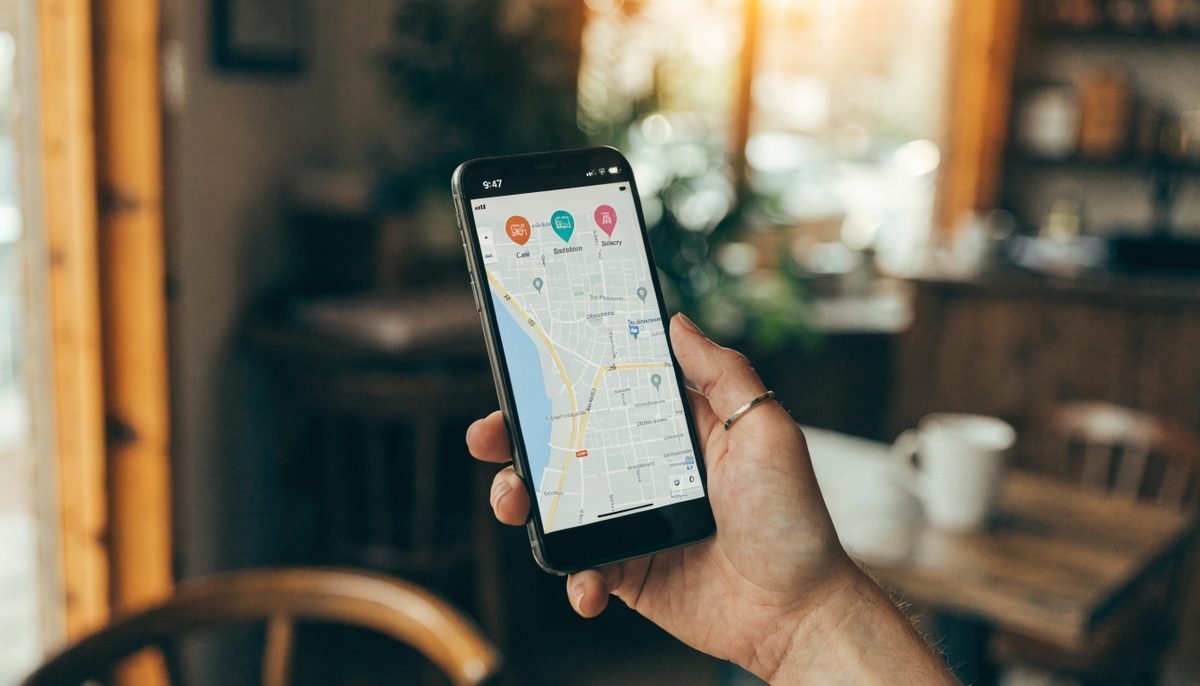
For a Toronto service business, the Google Maps 3-pack — those three local results that appear at the top of any "near me" search — has become the single most valuable piece of digital real estate in 2026. According to the 2026 Local Search Ranking Factors survey, businesses in the Map Pack capture roughly 44% of all clicks on local searches, before users ever scroll to the regular blue links. And with AI Overviews now pulling local recommendations directly from Google Business Profile data, the Map Pack is also the primary feeder of AI-cited local answers.
We run local SEO programs at Creative Scope for more than 40 Toronto service businesses across legal, dental, home services, professional services, and restaurants. This is the actual playbook we use — what Google's local algorithm rewards in 2026, the audit we run on every new profile, the review velocity formula, neighbourhood-level keyword strategy, and the mistakes that quietly keep most Toronto SMBs off the map.
Key takeaways
- The Map Pack now drives ~44% of clicks on local Toronto searches — more than positions 1–3 organic combined.
- Google's local algorithm has three pillars: relevance, distance, prominence. You can influence all three; most Toronto SMBs touch only one.
- GBP signals carry ~32% of Map Pack ranking weight. Your primary category is the single biggest single lever.
- Review velocity (3–6 fresh reviews/month) beats review volume. Steady wins.
- Neighbourhood-level keywords ("dentist Leslieville") convert better and rank faster than broad city terms.
- Realistic timelines: 4–12 weeks for moderate competition, 6–9 months for legal/dental/downtown commercial.
Why the Map Pack is the new Toronto front page
Three shifts have made Google Maps the dominant front page of local Toronto search:
- Mobile-first behaviour. More than 70% of Toronto local searches happen on mobile, where the Map Pack occupies the entire first screen above the fold. The first 10 organic results appear only after a scroll most users never make.
- AI Overviews lean on local entity data. Google's AI summaries for local queries pull names, ratings, opening hours and review text directly from Maps profiles. If you're not in the Map Pack, you're not in the AI answer either.
- Map Pack click-through rates are stable. Where organic CTR on positions 1–3 has dropped 20–35% in queries with AI Overviews (see our 2026 AI Overviews guide), Map Pack CTRs have held steady at 35–55% for the top result.
If you're a Toronto service business and you're not ranking in the local 3-pack for at least your primary service + neighbourhood combinations, you are competing for table scraps. The good news: Map Pack ranking is more controllable than traditional organic SEO. Fewer levers, clearer signals, and your competitors are usually missing the basics.
How Google ranks the local 3-pack

Google publicly states that the local algorithm is built on three pillars: relevance, distance, and prominence. Internally we treat these as the three levers, and roughly 90% of the Map Pack ranking work for a Toronto business falls into one of them.
| Pillar | What it measures | How to move it | Approx. weight |
|---|---|---|---|
| Relevance | How well your profile matches the user's search | Primary category, services listed, profile description, website content | ~40% |
| Distance | Physical proximity to the searcher (or the search location) | Verified physical address; service-area expansion; neighbourhood landing pages | ~25% |
| Prominence | How well-known and trusted the business is | Review volume + velocity, citations, local backlinks, brand mentions | ~35% |
Distance is the only pillar you can't directly move — your business is where it is. But relevance and prominence are entirely controllable, and that's where 95% of our Toronto local SEO work goes.
The Google Business Profile audit checklist
Before any other tactic, every Toronto profile we take on gets a 30-minute audit against the same checklist. Most profiles fail 12–18 of these on first pass. The lift from just closing those gaps is usually a 2–6 position move within 30 days.
- Primary category — Specific beats generic every time. "Pediatric Dentist" beats "Dentist", "Personal Injury Attorney" beats "Law Firm". Use the Pleper category tool or Whitespark to check what your top-3 competitors use.
- Additional categories — Add 2–5 supporting categories. Don't stuff; relevance must be honest.
- Business name — Exactly as registered. Adding keywords ("ABC Plumbing Toronto Best Plumber") is a suspension trigger.
- Verified address — Physical address for storefronts; hidden address for service-area businesses (mandatory if you visit clients).
- Service areas — Up to 20 specific neighbourhoods/cities. List them all if you serve them.
- Hours — Including special hours for stat holidays. Inaccurate hours torpedo trust signals.
- Phone number — A local Toronto area code (416, 647, 437) outperforms toll-free. Tracking numbers are fine if they forward consistently.
- Website URL — Direct to a relevant landing page, not the homepage if you have neighbourhood-specific service pages.
- Services list — Every service you offer, with a 1–2 sentence description per service. Heavy keyword opportunity here.
- Products — For retail and ecommerce, populate every product with photos and descriptions.
- Attributes — Wheelchair accessible, free Wi-Fi, women-led, LGBTQ+ friendly, payment methods. Fill all that apply.
- Photos — Minimum 20 photos: exterior, interior, team, products, recent work. Add 2–3 fresh photos monthly. Profiles with 100+ photos rank measurably better.
- Posts — Weekly updates, offers, events, news. Posts expire after 7 days but are a freshness signal Google rewards.
- Q&A — Seed it yourself. Add 8–15 common questions with proper answers; ignore and a competitor or troll may answer for you.
- Booking link — Direct booking integration if available (Calendly, Square, Vagaro, etc.).
Hostinger-hosted statistic worth internalizing: profiles at 100% completeness get 7x more clicks than profiles that look "mostly done." This is the cheapest, highest-ROI local SEO work you will ever do.
Reviews: the velocity formula
Reviews are the second-highest-weighted local signal at roughly 16% of Map Pack ranking, but the ranking mechanics are widely misunderstood. Three rules:
- Velocity beats volume. A profile with 60 reviews and 4–6 fresh reviews per month consistently outranks competitors with 200 stale reviews. Aim for a steady drip, not bursts.
- Recency is a signal of its own. A review from this week carries more weight than a 5-star review from 2022. The local algorithm assumes a year-old review is no longer fully representative.
- Content quality matters. Reviews that name specific services and neighbourhoods ("Mike from XYZ Plumbing fixed our burst pipe in Riverdale on a Sunday — he was here in 90 minutes") get cited verbatim in AI Overviews. Generic "great service!" reviews don't.
The system we install for every Toronto local SEO client:
- Automated review request 24–48 hours after service completion (via your CRM, calendar, or a tool like NiceJob or Birdeye)
- Direct review link in every invoice, email signature, and receipt
- A short on-site "review collection" workflow for in-person services (QR code in the lobby, on the receipt, etc.)
- Public response to every review — positive and negative — within 48 hours, mentioning the service and neighbourhood by name
- Monthly review velocity report to spot drops before they impact rankings
Realistic target: 4–6 new reviews per month for a small Toronto business, 8–15 for a higher-volume operation. Below 2/month and rankings start to slip within 60 days.
Neighbourhood-level keyword strategy
One of the single biggest unlocks for Toronto local SEO in 2026: stop targeting "plumber Toronto" and start targeting "plumber Etobicoke", "plumber Leslieville", "plumber North York". Neighbourhood-level keywords convert 2–4x better, rank 60% faster, and produce qualified leads with much higher intent (they want someone in *their* area, not just somewhere in Toronto).
The build-out:
- One dedicated service-area landing page per priority neighbourhood (start with 5, expand to 12–18 over 6 months)
- Each page needs locally specific content: landmarks, common neighbourhood-specific service requests, transit/parking notes, real client work in that area, a neighbourhood-specific testimonial
- LocalBusiness schema on each page with
areaServednaming that neighbourhood specifically - Internal links from the homepage and main service pages to each neighbourhood page
- One backlink per neighbourhood page from a relevant local source (community publication, BIA, neighbourhood blog)
Avoid the temptation to spin up thin "[city]/[neighbourhood]" pages programmatically. Google penalizes thin duplicate templates aggressively in 2026 — pages must be substantively different to be useful. 600+ words of locally specific content per page is the floor.
Local citations and link building
Citations — mentions of your business name, address, and phone number (NAP) on third-party sites — still carry ~7% of Map Pack ranking weight. Two rules:
- Consistency over volume. Your NAP must be byte-for-byte identical across every citation. Mismatched suite numbers, abbreviated street names ("St." vs "Street"), or different phone formats are the most common ranking blockers we find in Toronto audits.
- Focus on the right sources. Yelp, Apple Maps, Bing Places, Yellow Pages, Facebook, Better Business Bureau, plus 3–5 Toronto-specific directories for your industry (e.g., Lawyer Locate for legal, RateMDs for dental). Avoid bulk citation services that submit to 200 low-quality directories — those days are over.
For local link building, the highest-impact Toronto sources are: local news (BlogTO, Now Toronto, daily Hive), industry trade publications, neighbourhood BIAs, charity sponsorships, and partner businesses in adjacent verticals.
Tracking your Map Pack position

Map Pack position varies by where the searcher is physically standing. A business that ranks #1 from inside its own neighbourhood may rank #6 from across town. Track from a grid of locations, not a single point:
- Local Falcon or BrightLocal Grid — Visualize your Map Pack rank from a grid of 49 or 81 points across your Toronto service area. Weekly cadence. The single most useful local SEO tool in our stack.
- Google Business Profile Insights — Direction requests, calls, profile views, photo views. Track week-over-week trends.
- Search Console "Search Appearance" filter — Filter to "Local Pack" to see organic queries that surface your profile.
- UTM-tagged GBP website link — Tag your profile's website link with utm_source=gbp so Google Analytics can attribute traffic and conversions specifically to Map Pack visitors.
Common mistakes that keep you out
The patterns we see in audits of Toronto businesses that "should be ranking but aren't":
- Wrong primary category. Picking the generic parent category instead of the specific one. Always the first thing we fix.
- Stuffed business name. Adding keywords to the business name violates Google's guidelines and is a top suspension trigger. The name must match what's on your storefront and registration.
- Visible street address for a service-area business. If you visit clients (electrician, plumber, mobile dental, etc.) you must hide your address. Showing it triggers suspension.
- Duplicate listings. An old listing from a previous owner or location, often unclaimed. These split your authority and confuse Google. Identify and request merge or removal.
- Bulk review requests. Asking 50 past clients for reviews in one week looks like fraud and can trigger filtering or suspension. Steady is safe.
- Ignoring negative reviews. Public, professional responses to negative reviews matter more for ranking than the negative review itself. Silence reads as guilt.
- Inconsistent NAP across citations. Auditable in 30 minutes with a tool like Moz Local or BrightLocal.
- No neighbourhood landing pages. Targeting only "[service] Toronto" leaves 80% of the realistic search volume on the table.
If your traditional organic SEO is healthy but Map Pack isn't moving, the fix is almost always one of the above — not a backlink or content quality issue. Our guide to why websites fall out of Google covers the foundational layer this article assumes is in place.
Want help getting into the Toronto Map Pack?
We run local-first SEO programs for Toronto service businesses.
Full GBP audit and rebuild, review velocity system, neighbourhood landing pages, citation cleanup, weekly grid tracking, and monthly reporting that ties Map Pack movement to actual phone calls and bookings. Free audit first, monthly retainer after.
See our SEO servicesFall 2026 update: categories, review text and the website side
Three things have shifted since this playbook was first published in July, and all three are cheap to act on.
Secondary categories now carry more weight. Google is matching more queries against secondary Business Profile categories, not just the primary one. A Toronto agency listed as "Marketing agency" that also builds websites should carry "Website designer" as a secondary category; a renovation contractor should list "Kitchen remodeler" and "Bathroom remodeler" separately. Audit the full list of categories your profile qualifies for and add every one you genuinely deliver. Do not add ones you do not.
Review text is a ranking input, not just a trust signal. Google reads the words in reviews. Ten reviews that say "great service" do less for a query like "web design agency toronto" than three that say "designed our website." When you ask for a review, tell the customer what you did for them in a sentence and let them describe it in their own words. Never script the review itself.
The website has to say the same thing the profile says. The service page you link from the profile should carry the same primary category wording, the same address and phone, LocalBusiness schema, and named neighbourhoods. A profile for a web design business should point at a real web design page, which is why our own profile links to our Toronto web design agency page rather than the homepage.
14-day quick-win checklist
If you have nothing else, run this 14-day push. Most Toronto businesses see Map Pack movement inside 30 days of completing it.
- Day 1. Audit your GBP primary and secondary categories. Switch if needed.
- Day 2. Verify NAP consistency across your top 10 citations using Moz Local or a manual check. Fix mismatches.
- Day 3. Add 15+ photos (exterior, interior, team, recent work). Commit to 2 fresh photos weekly.
- Day 4. Complete every GBP attribute, services list with descriptions, and 8 seeded Q&A entries.
- Day 5. Set up an automated review request workflow tied to your CRM or invoicing system.
- Day 6. Write public, professional responses to every existing review (positive and negative).
- Day 7. Identify your 5 priority neighbourhoods. Build a content brief for each.
- Days 8–10. Write and publish your first neighbourhood landing page (600+ words, LocalBusiness schema with areaServed).
- Day 11. Add LocalBusiness JSON-LD to your homepage and main service pages with geo coordinates, opening hours, and aggregateRating.
- Day 12. Start posting weekly GBP updates (offers, news, recent work).
- Day 13. Set up Local Falcon or BrightLocal Grid tracking from 25+ points across your service area.
- Day 14. Document your baseline: rank, reviews, review velocity, GBP insights numbers. Recheck weekly.
For more on the AI search shift reshaping local visibility specifically, see our companion AI Overviews guide for Toronto businesses, or keep reading the blog for more tactical breakdowns.


